Effective risk management begins with knowing what you're up against. Our systematic identification process surfaces threats across every dimension of your business before they become costly incidents.
You cannot manage what you cannot see. Risk identification is the essential first step — establishing a complete inventory of potential threats before any assessment or mitigation work can begin.
Our identification methodology goes beyond surface-level checklists. We combine structured interviews, process mapping, historical data analysis, industry benchmarking, and emerging threat intelligence to build a comprehensive risk universe specific to your organisation.

We systematically examine risks across eight key categories to ensure complete organisational coverage.
Credit exposure, liquidity shortfalls, currency fluctuations, interest rate sensitivity, and investment portfolio vulnerabilities that can erode balance sheet stability.
Process failures, system outages, human error, supply chain disruptions, and capacity constraints that affect your ability to deliver products or services reliably.
Legal obligations, regulatory changes, licensing requirements, and enforcement actions across all applicable jurisdictions and industry-specific standards.
Competitive disruption, market shifts, M&A integration failures, technology obsolescence, and strategic misalignment that can threaten long-term business viability.
Key person dependency, talent retention failures, workplace incidents, cultural misalignment, and leadership succession gaps that undermine organisational capability.
Media exposure, social media crises, stakeholder trust erosion, ESG controversies, and brand damage events that can impact customer relationships and market position.

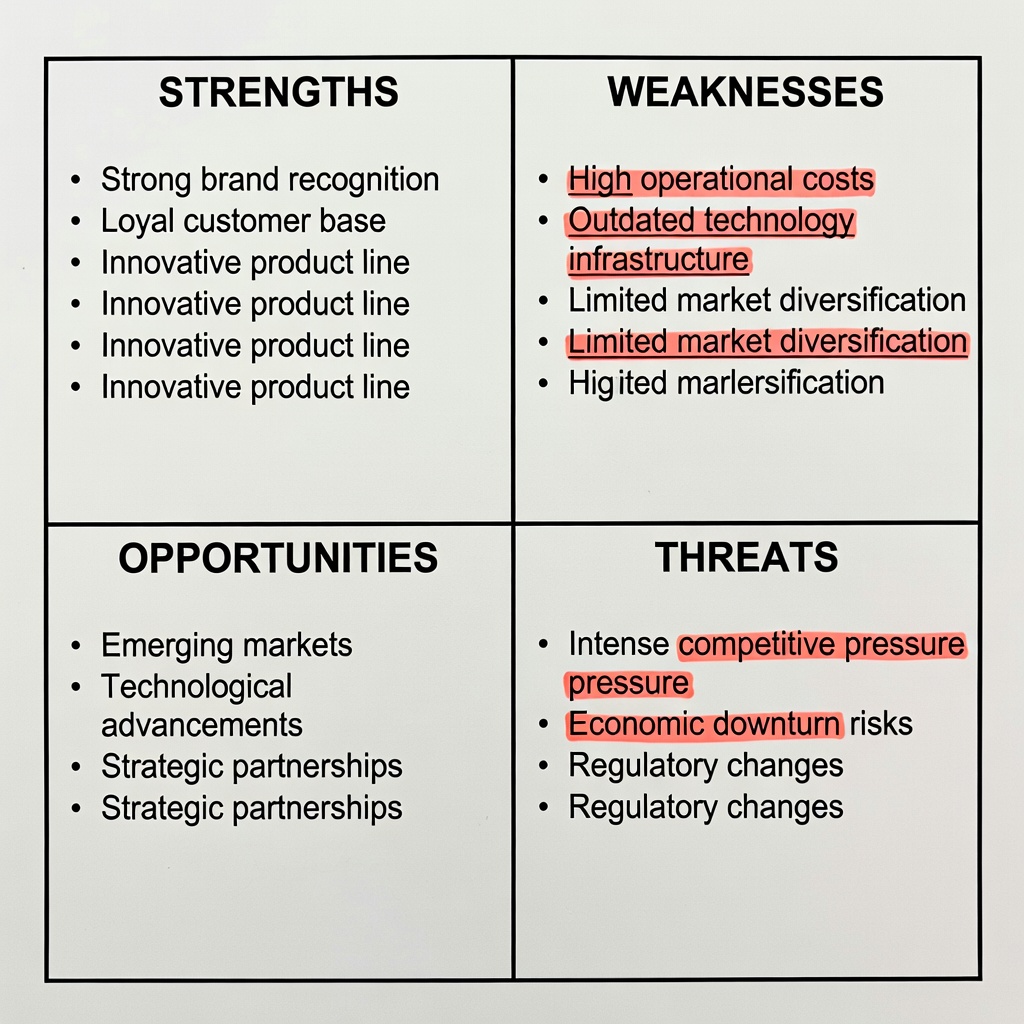
Our risk-enhanced SWOT framework goes beyond traditional strategy tools to surface risk implications at each quadrant, providing a direct bridge between strategic position and risk exposure.
By overlaying risk intelligence onto strategic analysis, we help leadership teams understand not just where they stand today, but what threatens and enables future positions.